

The Everett Massacre

Welcome back to Myths & Mischief! This is your Lovable Lord of Lore, today’s mischievous myth is about the battle between capitalism and worker, in one of America’s bloodiest altercations regarding the owners and unionism.
Freedom is never free. It requires that people constantly keep up their guard, and fight for every right that they require. Sometimes governments help this process, other times they hinder it.
When John F. Kennedy told the country to “Ask not what your country can do for you, but what you can do for your country,” he was recognizing that it is up to the citizenry to pursue the world that they wish to see. At times, this pits the people against the officials that have alterative motives.
For example, the bloodiest battle in Pacific Northwest labor history occurred in 1916.
The Backdrop
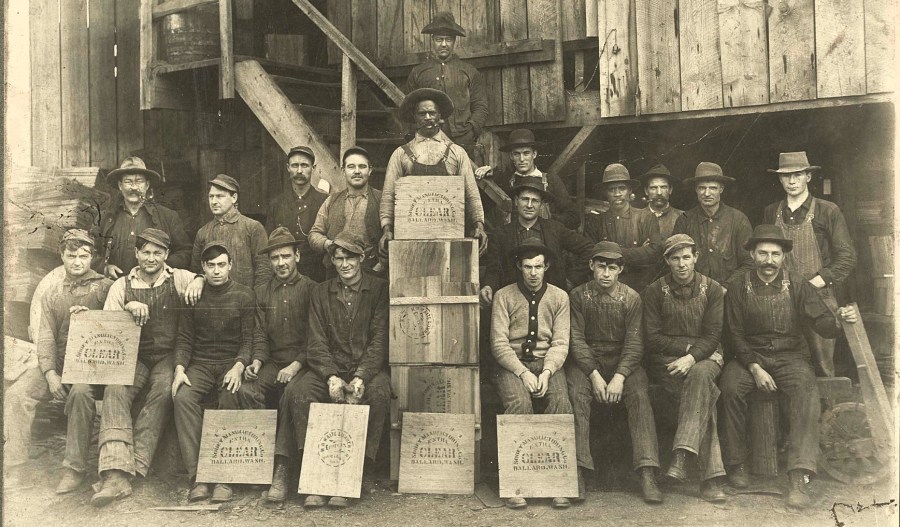
It started when shingle weavers went on strike in Everett, Washington. It was a dangerous job. Many workers were missing digits, while others suffered from breathing in cedar dust and other toxic fumes. The country had just recovered from a recession and pay scales had not been adjusted even though the company was making more money. The workers demanded that they at least return to their pay scales from before the recession. In general, they identified as trade workers and generally opposed the idea of one large union for all including unskilled workers.

This was happening as the I.W.W. (or Wobblies) was trying to get a foothold in America in their effort to create one giant workers’ union that would change the balance of power away from capitalists. They were referred to as Wobblies because when they would speak in front of crowds, they had thick Eastern European accents, and many people had difficulty understanding them.
Several members of the I.W.W. had arrived earlier by train. They were harassed by local police who were paid by the companies who were in dispute with the workers. The I.W.W. workers were kicked out of Everett, denying them access to the workers or their attempts at exercising their freedom of speech. Though beaten a bruised, the I.W.W. started planning another attempt at enticing workers to join their cause.
In another incident, about 40 street-speaking Wobblies had gone to Everett to speak. They were taken to an area known as Beverly Park by deputies and were brutally beaten and told to leave town as they had to walk, with their injuries, the 25 miles back to Seattle.

The I.W.W. planned to take 2 steamer ships from Seattle north toward Garner Bay. The plan was to have a public demonstration in Everett on Sunday, November 5, 1916. They would go the corner of Hewitt and Wetmore, a spot that was frequently used by street speakers. Their mission was to promote free speech and collect people into their union.
In Everett, the word was that a group of armed anarchists was coming to burn their town. This information was not only dispersed by the company owners, but law enforcement. They were using fear to influence people to deny free speech and labeling the group as anarchists was not only inaccurate, but it mirrors today’s criticisms of socialists, leftists and people who are woke without addressing what these people are actually trying to achieve. Sheriff Donald McRae headed the effort and shut down the I.W.W. offices in Everett and violently opposed anyone for speaking in favor of the Wobblies.

Bloodshed
About 200 citizens were deputized under the authority of Snohomish County Sheriff Donald McRae. They all met at the dock to repel the “invaders.” As the first steamer arrived, the sheriff asked to speak to their leader. Being a union, they replied that they were all leaders. It is unknown which side fired first, but an account of an I.W.W. member claimed that the sheriff had given a signal. One shot rang out, followed by both sides opening fire. The passengers on the ship all rushed to the far side of the ship which almost capsized it. Bullets had hit the pilot house, but the captain was able to back it out of the port and they returned to Seattle. The second ship never attempted to land and also returned to Seattle. Once they arrived in Seattle, 74 I.W.W. members were arrested and transported to Everett to await trial.

Officially, the I.W.W. toll was listed as 5 dead and 27 wounded, but it is possible that as many as 12 of them died from the shootout. On land, 20 deputies including the sheriff were wounded, and 2 were killed.

The Aftermath
Only one of the I.W.W. was charged for the murder of the 2 deputies, the others were released. Thomas Tracy, a teamster was the one charged. It was a very publicized trial where he was acquitted. Even so, that was the high-water mark for the popularity of the I.W.W. in the Pacific Northwest. The sheriff, nor the owners were ever charged with anything.

The willingness to protest runs risks. Even in a free society, where freedom of speech is in the constitution, protesters run the risk of violence. This is more frequently the case when they are opposing powerful entities, who have political sway over those who are meant to protect and serve. The killing of any protester, regardless of their message or their location, is wrong. This includes places like Iran and places like Minnesota where armed thugs ended lives of those willing to stand up and demand their freedom. Freedom is never free, but it is worth fighting for. Keep this in mind when it seems like we are moving in the wrong direction and ask yourself, what can you do for your country?
That’s it for this week’s installment, this is your Lord of the Lore signing off.
If you liked this tale, make sure to subscribe for more so you don’t miss the next installment of mischievous myths!
Discover more from BASIC Studios
Subscribe to get the latest posts sent to your email.


Leave a Reply